
Japan often builds the car around the equipment. Australia often converts the car afterwards.
Toyota Welcab, Honda Almas, Nissan Chaircab. Ramps, lifts, winches and rotating transfer seats built in on the production line and sold in volume to Japanese families and care providers. A local conversion often costs more than importing one that was built that way.
Why wait for one from Japan?
Conversion vehicles are the hardest thing to find locally. In Japan they were built on the production line and sold in volume, so there are examples to choose between.
Same year, similar kilometres, similar specification. You get the landed figure and the local figure side by side before you bid — and if the Australian car is the better buy, we say so.
We compare landed cost against buying a local vehicle and paying for the conversion afterwards.
Auction grade and condition notes, plus the specific ramp, lift or rotating-seat equipment confirmed on the actual car.
Ramp, powered lift, lowered floor, rotating passenger seat, side or rear access. Search for the one that suits the person.
Wrong equipment, poor sheet, or bidding too high: we wait. Getting the access right matters more than getting it fast.
Yes, importing takes longer. The reason to wait is equipment built for the job and confirmed before purchase, rather than adapting whatever happens to be available locally.
What does getting in and out need?
Start with the person, not the car. Each answer maps to a different piece of factory equipment, with its own name in the listing, and that is the vocabulary we search on.
The front or second-row seat swivels out of the door and, on the powered versions, lowers to hip height outside the car. The passenger sits down at standing height rather than folding into a low opening. Manual swivel versions cost less and suit someone with reasonable trunk control.
Measure the chair, then the car
The most common disappointment in this category is a vehicle that is right in every way except that the chair does not fit through the aperture or under the roof. Four numbers settle it. Send them and we filter on them.
Widest point including hand rims and any tilt hardware. Rear apertures on Japanese compact vans commonly run 700–760 mm.
Floor to the top of the head while seated in the chair, since that is what has to clear the door opening and the roof.
Front castors to rear wheels, plus whether the chair needs to turn once inside or can stay facing forward.
Chair plus occupant against the rated capacity of the ramp, lift or winch. Powered chairs and scooters are where limits get exceeded.
Getting it on the road here
SEVS includes a criterion for vehicles with features designed for people with disability. It does not depend on the car being 25 years old.
Occupant restraints and wheelchair tie-downs are checked against Australian requirements at compliance. An approved engineer signs off the installation.
Plans generally fund the modification rather than the car, and an OT assessment usually comes first. Auctions do not wait for approvals.
Lifts, winches and rotating seats need occasional attention. We line up a mobility workshop in your state before you buy.
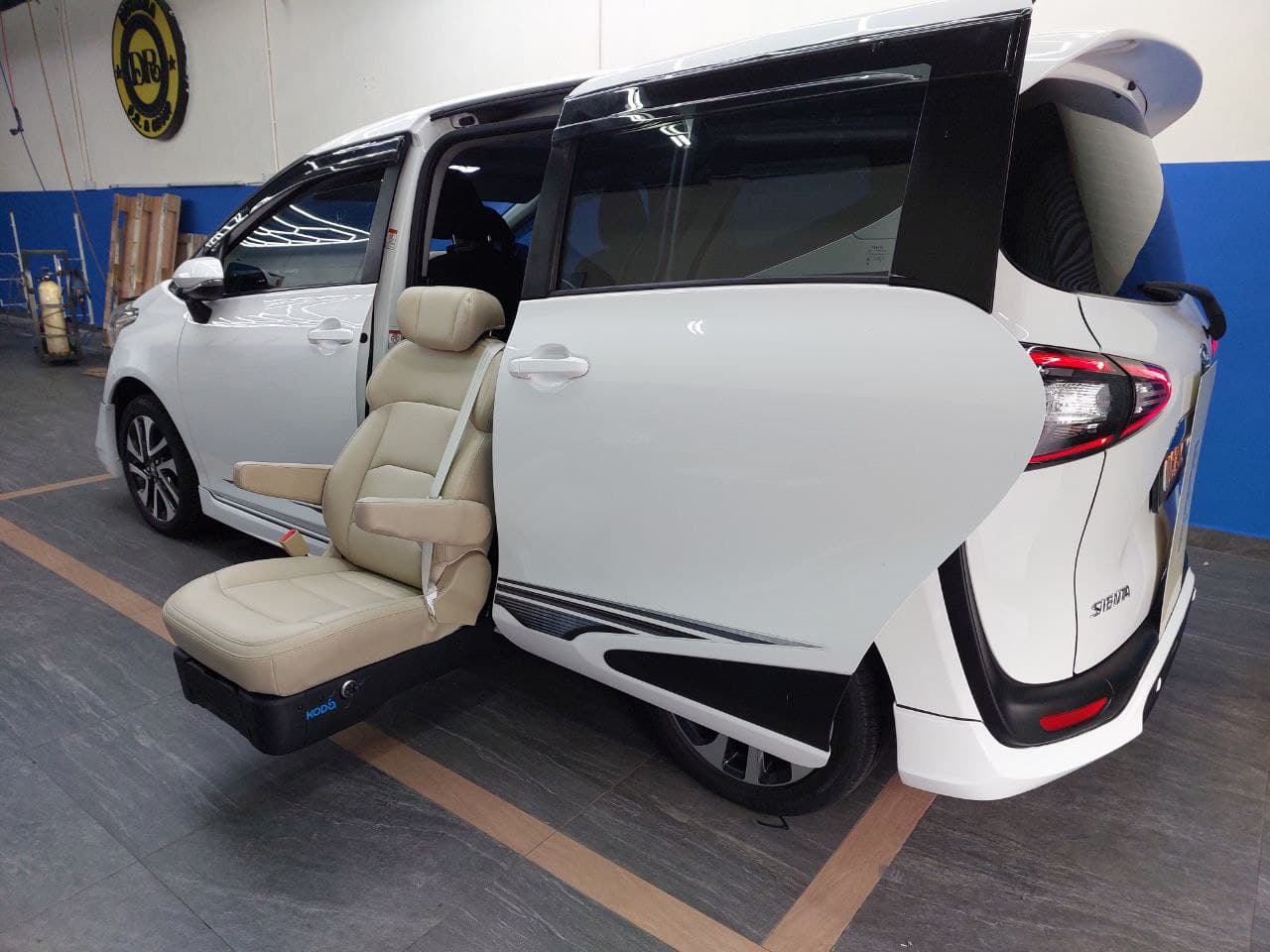
A factory transfer seat lowered outside the vehicle. The passenger sits down at standing height instead of folding into a low door opening.
Mobility lots at auction this week
Browse all mobility vehicles →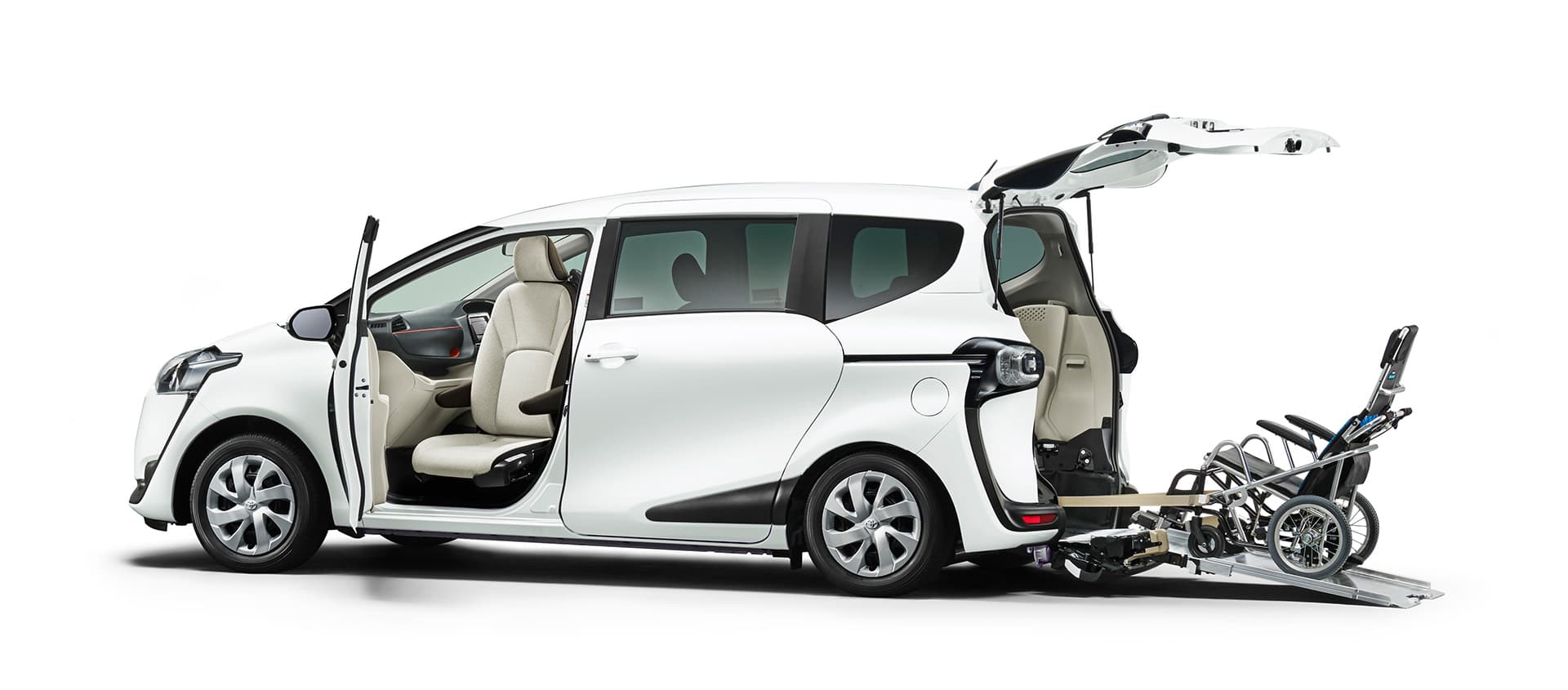 4.54
4.54 44.5
44.5Estimates include bidding, shipping, duty, GST, compliance and restraint certification. Aperture figures are measured from the vehicle where available and from the manufacturer’s conversion data otherwise; both are confirmed in writing before bidding.