
Follow one import from start to finish
You choose the car and set your maximum. We coordinate the rest.
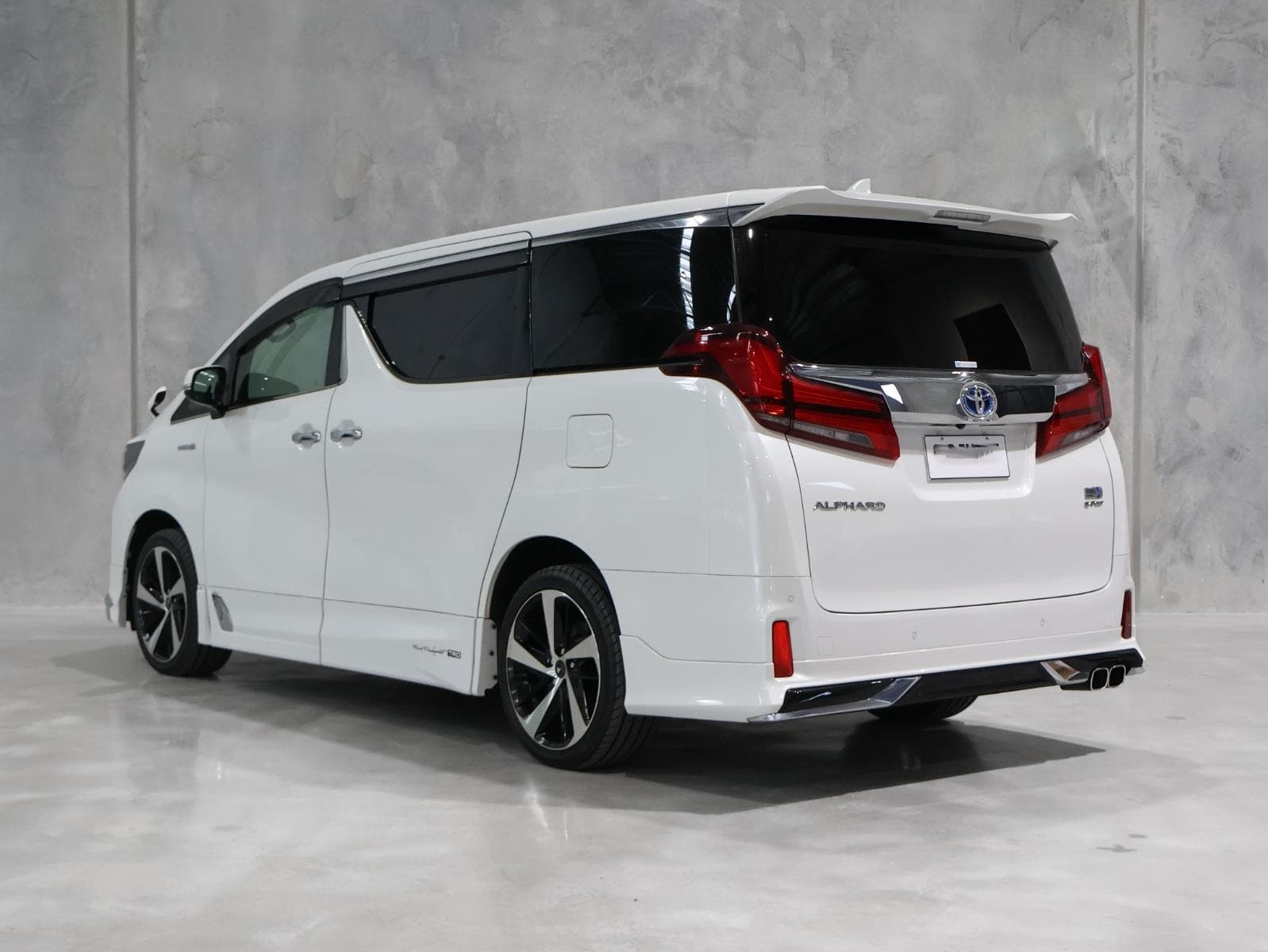
We source and bid on vehicles through Japanese auctions for Australian buyers. Rather than explain the process in the abstract, here is one Toyota Alphard from auction listing to compliant and ready to register in Melbourne — with every major step and cost along the way.
ONE WORKED EXAMPLE AT 1 AUD = 112.36 YEN — NOT STANDARD PRICING OR GUARANTEED TIMING. SHIPPING, CUSTOMS AND COMPLIANCE FIGURES ARE ESTIMATES.
Why wait for one from Japan?
The process below takes about eleven weeks. Here is what the wait buys you.
We compare the full landed cost against a comparable Australian car: same year, similar kilometres, similar specification.
Auction grade, condition notes, verified kilometres and the inspector’s sheet, translated. In-person inspection on selected vehicles where available.
We search across the Japanese auction houses instead of the few of that model listed locally this week.
Poor sheet, questionable repair history, or bidding past sensible money: we stop and wait for the next one.
Yes, importing takes longer. The reason to wait is to get the right car, with more information, rather than simply the first car available locally.
Finding a car worth bidding on
Around 30,000 vehicles cross Japanese dealer auction blocks each week. We filtered that week's lots to Grade 4 and above, under 80,000 km and inside a $55,000 landed budget, then sent four cars back with a landed-cost estimate on each.
Searching, shortlisting and quoting cost nothing.
Reading the auction sheet
Every lot carries an inspector's sheet — grades plus a panel map of every scratch and dent, in Japanese shorthand. We translate it in full and flag anything that affects compliance or resale.
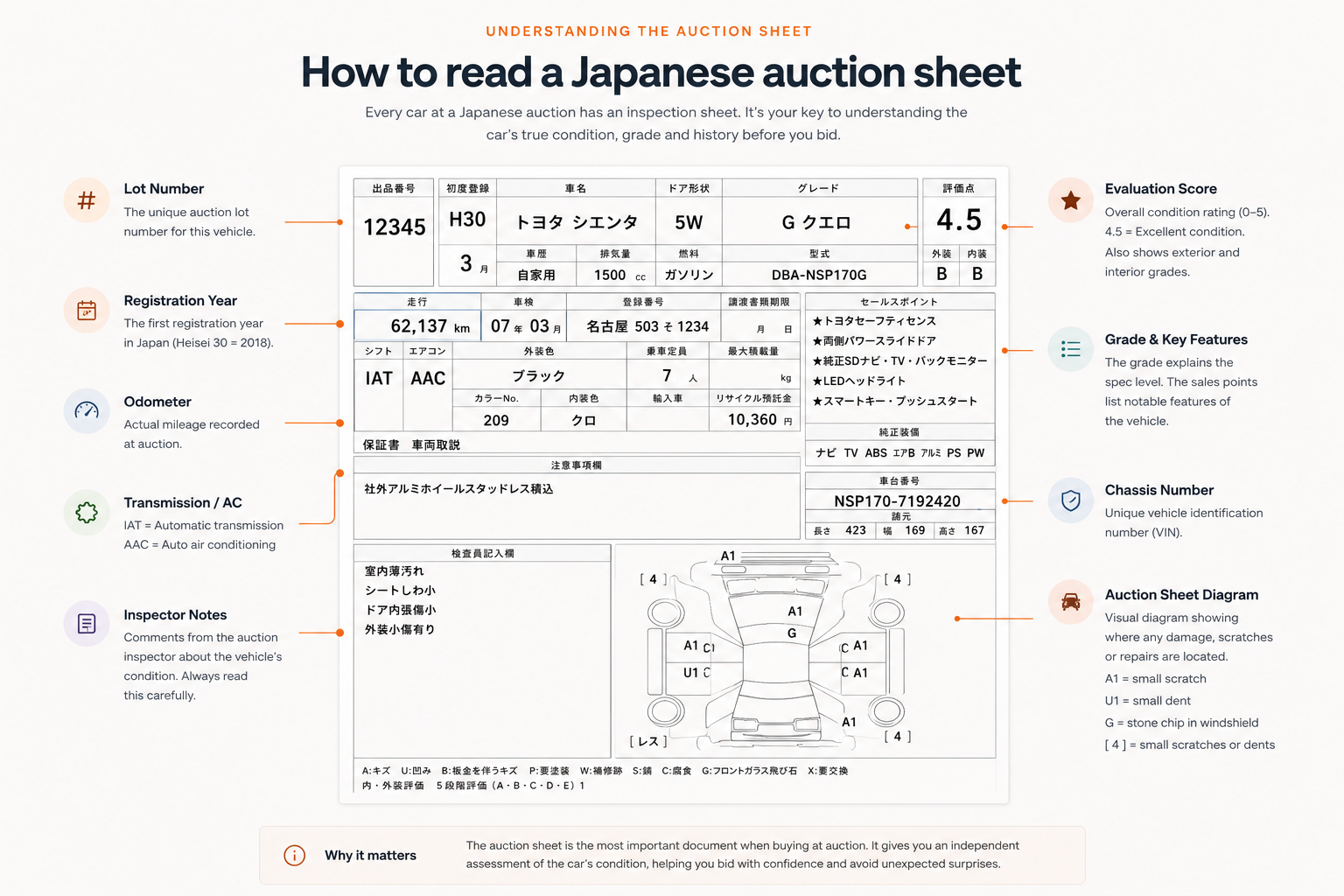
You see the car's real condition before you are financially in.
You set the ceiling. We do the bidding.
Auctions run fast and in Japanese, so we bid for you — but only up to the maximum you write down. This buyer capped it at ¥3,400,000. It hammered at ¥3,180,000. Past the cap we stop and wait for the next car.
You pay the winning auction price — not your maximum bid.
Payment one falls due only once the lot is won. Any deposit terms are confirmed with you before bidding.
Won. Payment one, to the bidding company.
We confirm the result in writing and the Japan bidding company invoices the FOB total — the ¥3,180,000 hammer price plus their ¥209,000 service fee, converted at the settlement rate. Export de-registration starts the same day.
Payment 1 of 3, in full: the FOB total to the Japan bidding company.
Nagoya → Melbourne
5 WEEKS, INDICATIVEThe shipping company handles towing to port, the mandatory heat treatment and the vessel booking, then invoices you directly. Sailing schedules move, so you get a position update each week rather than one promised date.
Adds heat treatment $250, towing $250 and shipping $2,619, estimated.
Customs and biosecurity
Customs entry and GST are assessed on arrival and settled through the shipping company. Government charges on a published schedule, passed through at cost and already in your estimate.
Adds customs and GST of $3,423, estimated. Payment 2 of 3 complete.
Compliant, and ready to register.
Engineering and compliance happen at a licensed workshop, and this is the phase you pay us for. Three weeks after docking the car was compliant and ready to register — eleven weeks from the shortlist email. State registration and CTP sit outside the estimate below.
Adds engineering and compliance $1,980 and our service fee $1,100, both GST inclusive. Payment 3 of 3.
One worked example at 1 AUD = 112.36 yen. Exchange rate, shipping schedule and compliance scope change the total on every car.
Payment happens in three steps
Three invoices, three parties, no surprises in between.
You never pay one lump sum into a black box. Each phase is invoiced by the party doing the work, in the order the work happens — and you hold the full estimate before the first one.
That was one car. Yours will have its own numbers.
Start from a live auction lot, tell us your spec and budget, or run your own figures through the landed-cost calculator first.